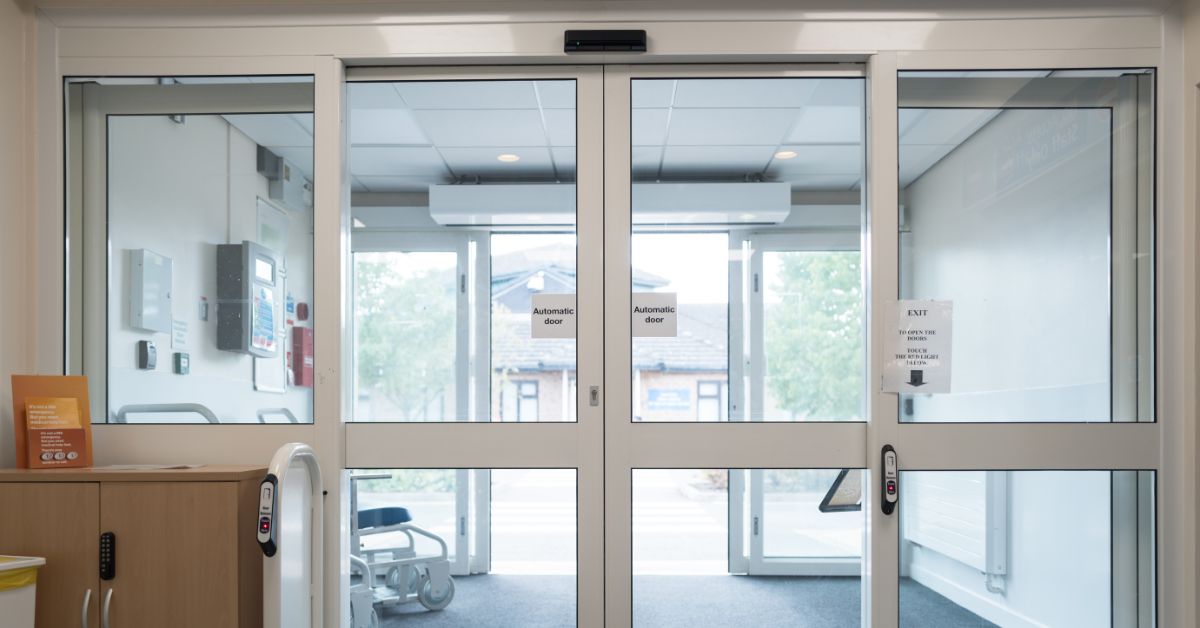
Businesses must create environments that welcome every customer, employee, and visitor who walks through the door. Automatic doors provide a practical solution that improves accessibility, increases convenience, and enhances safety.
Many commercial properties rely on automated entry systems to support modern accessibility standards and enhance daily traffic flow. Companies that invest in these doors strengthen customer satisfaction and improve building functionality.
Accessibility affects more than compliance requirements because it directly impacts the overall experience inside a business. Many customers need entrances that accommodate mobility devices, strollers, carts, and busy foot traffic. Understanding how automatic doors enhance business accessibility helps you commit to providing an accessible space for everyone.
Why Accessibility Matters for Modern Businesses
Accessibility plays a vital role in how people interact with commercial spaces. Visitors often judge a business before stepping inside, and entrance design influences those first impressions. Automatic doors signal that a business values convenience, safety, and inclusive access for all guests. Companies that improve accessibility also strengthen their reputation in the community.
People with mobility challenges benefit greatly from automated entry systems. Wheelchair users, individuals using walkers, and customers carrying heavy items often struggle with manual doors. Automatic systems remove that obstacle, allowing visitors to move freely into a building. Businesses that improve accessibility encourage more people to enter and feel comfortable inside the space.
Creating Barrier-Free Entry for Every Visitor
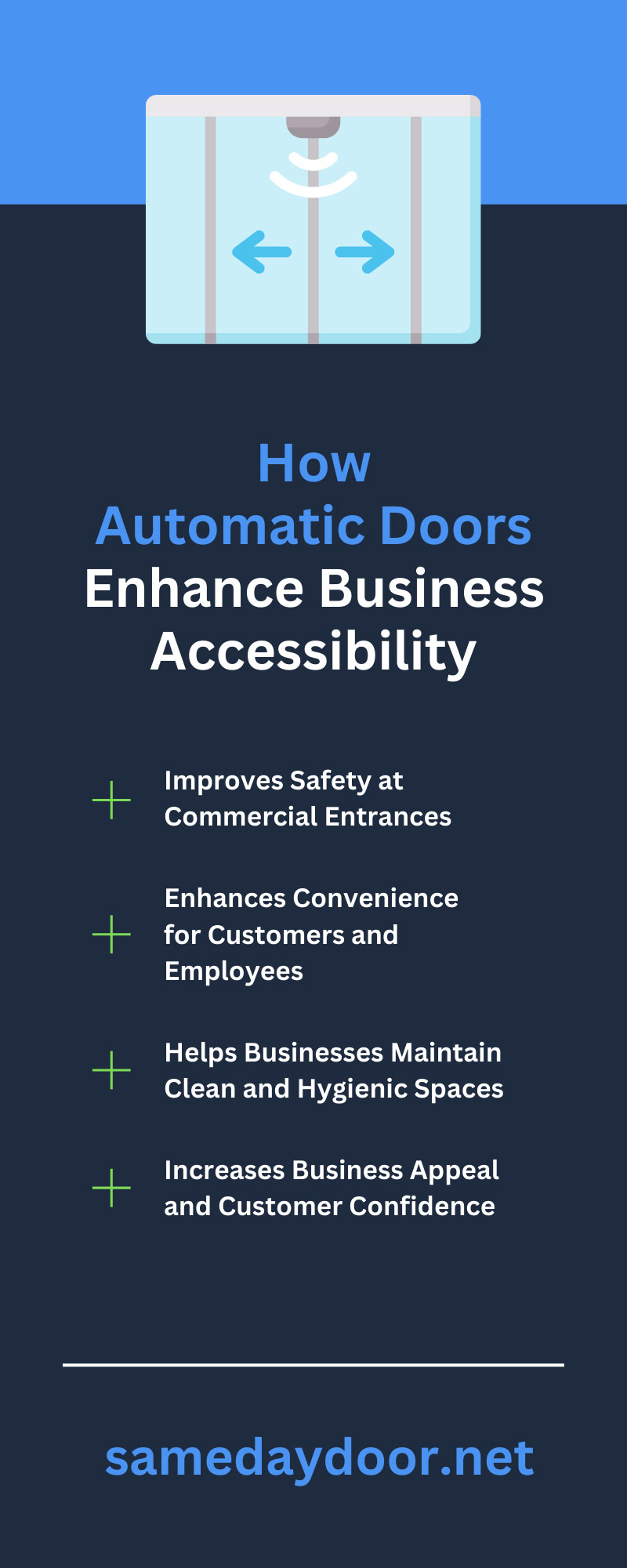
Barrier-free entrances help businesses welcome a wider range of customers. Automatic doors allow visitors to move in and out without physical effort or assistance. Sensors detect movement and open the door smoothly, which creates a seamless entry experience. This convenience benefits both customers and employees throughout the day.
Businesses often experience high foot traffic during peak hours. Automatic doors help manage these busy periods by allowing multiple people to pass through quickly. The system opens and closes efficiently without causing bottlenecks at the entrance. A well-designed entryway improves traffic flow and reduces frustration for customers entering the building.
Supporting ADA Accessibility Standards
The Americans with Disabilities Act (ADA) requires businesses to provide accessible entry points. Automatic doors help companies meet these standards by eliminating the need for physical force to open heavy doors.
Properly installed automated systems ensure that individuals with disabilities can access the building independently. Businesses that prioritize compliance also demonstrate respect for customer needs.
Manual doors often require a strong push or pull. That physical effort creates difficulty for many individuals, especially those with limited mobility or strength. Automatic doors remove that challenge entirely through motion sensors or push-button activation. Businesses that install these systems create entrances that meet both legal requirements and customer expectations.
Improving Safety at Commercial Entrances
Safety plays a major role in the design of commercial door systems. Automatic doors reduce the risk of accidents caused by heavy doors swinging open or closed unexpectedly. Sensors detect movement and prevent the door from closing when someone stands in the entry path. This technology protects customers while also reducing liability risks for business owners.
High-traffic locations benefit from controlled door movement. Manual doors often slam shut when people rush through entrances or fail to hold them properly. Automatic systems operate smoothly and predictably, which reduces potential injuries. Businesses that invest in safer entry solutions create a more secure environment for visitors.
Enhancing Convenience for Customers and Employees
Convenience influences how customers feel about a business before they even reach the service counter. Automatic doors allow visitors to enter without juggling bags, carts, or packages. This simple feature improves the overall customer experience from the moment someone approaches the building. Employees also benefit from smoother entry during busy work hours.
Staff members often carry supplies, equipment, or deliveries into the building. Automatic doors eliminate the need to pause and open a heavy door while holding items. The system detects movement and opens automatically, which allows employees to move efficiently. Businesses that improve convenience often notice better productivity and smoother daily operations.
Helping Businesses Maintain Clean and Hygienic Spaces
Modern businesses pay close attention to cleanliness and sanitation. Automatic doors reduce the number of surfaces customers must touch when entering a building. Touchless entry systems limit contact with door handles, which helps reduce the spread of germs. Many healthcare facilities, grocery stores, and medical offices rely on this advantage.
Customers appreciate environments that prioritize hygiene and safety. Automatic doors create a cleaner entry experience while supporting public health practices. The touchless design protects visitors and employees during busy business hours. Businesses that install these systems reinforce customer confidence in their facilities.
Increasing Business Appeal and Customer Confidence
Customers often associate modern building features with professionalism and reliability. Automatic doors create a polished and organized appearance at the entrance. This technology shows that a business invests in convenience and accessibility for visitors. A welcoming entry encourages customers to feel comfortable before entering the space.
Businesses that upgrade their entrances often see improvements in customer perception. Automatic doors signal efficiency and attention to detail. Visitors notice the difference immediately upon approaching the building. A smooth entry experience helps reinforce a positive brand image.
Maintaining Reliable Automatic Door Performance
Automatic doors require regular maintenance to operate safely and efficiently. Routine inspections help identify worn components, sensor issues, or alignment problems before they cause disruptions. Businesses that maintain their door systems prevent unexpected failures during busy hours. Consistent maintenance also extends the equipment’s lifespan.
Professional technicians understand how to properly service sensors, motors, and control systems. Reliable maintenance ensures the door opens and closes smoothly for every visitor. Businesses that schedule regular inspections protect their investment while maintaining accessibility.
Expert service providers, such as Same Day Door Service, support these systems through specialized commercial automotive door service when complex problems arise.
Choosing the Right Automatic Door Solution
Using automatic doors to enhance your business’s accessibility starts with evaluating your layout, traffic patterns, and accessibility needs before selecting an automatic door system. Sliding doors often work well for high-traffic retail environments, while swinging doors fit smaller entryways.
The right installation ensures visitors experience smooth, reliable access every time they enter the building. Professional installation guarantees that the system meets safety and accessibility standards.
At Same Day Door Service, our experienced technicians understand how to configure sensors, door speed, and safety mechanisms correctly. Regardless of if it is an installation or repair, we can ensure a fast, reliable service that keeps your business entrance functioning well.
Reliable automatic doors create accessible spaces that serve customers and employees every day, so don’t ignore any issues you see. Instead, call Same Day Door Service for the best automatic door services.