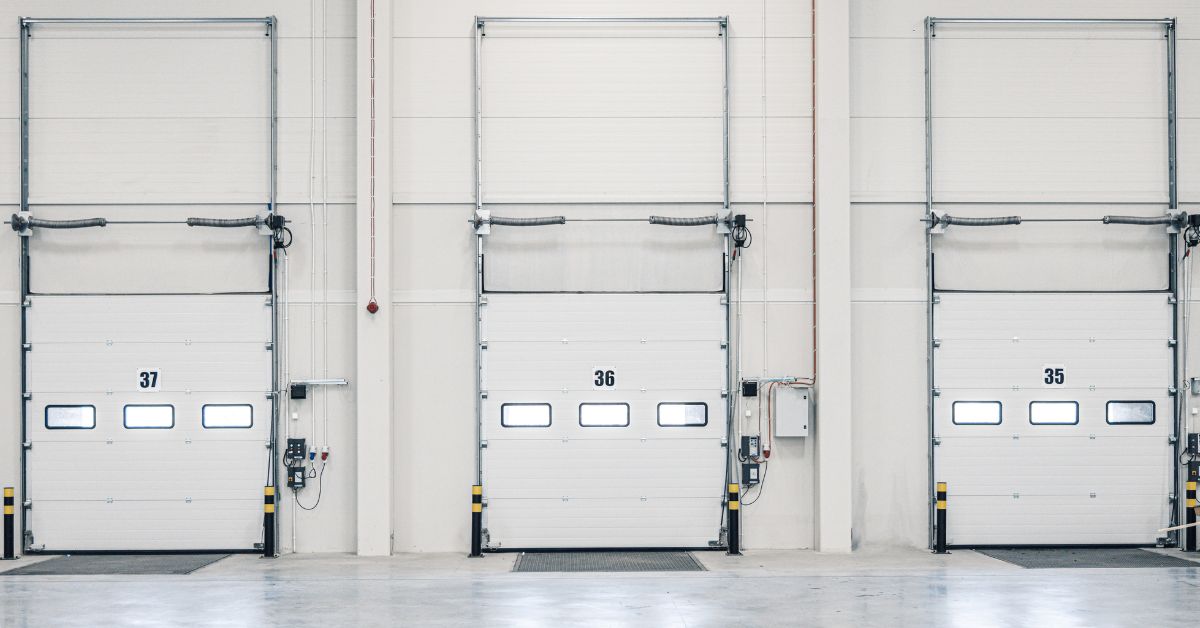
Temperature control plays a major role in protecting inventory, maintaining comfort, and reducing operating costs. Roll-up doors often serve as large openings that directly affect indoor climate conditions. When business owners are unaware of how roll-up doors affect their climate, they risk straining their HVAC system and increasing utility expenses.
Understanding how to control the temperature in your facility with roll-up doors helps facilities operate more efficiently year-round. Proper roll-up door installation and maintenance significantly improve climate control and energy performance.
Why Roll Up Doors Affect Indoor Temperatures
Roll-up doors create large openings that directly connect indoor and outdoor environments. When insulation fails or gaps develop, outside air enters the building quickly. Hot summer air and cold winter drafts force HVAC systems to work harder. This cycle raises energy consumption and reduces comfort levels for employees and customers.
Steel curtain slats, bottom bars, and guide tracks all influence air movement. Poor alignment or worn components allow unwanted airflow around the door edges. Even small gaps cause noticeable temperature swings in warehouses and storefronts. Addressing these issues early helps maintain stable interior conditions.
Choose Insulated Roll Up Doors for Better Efficiency
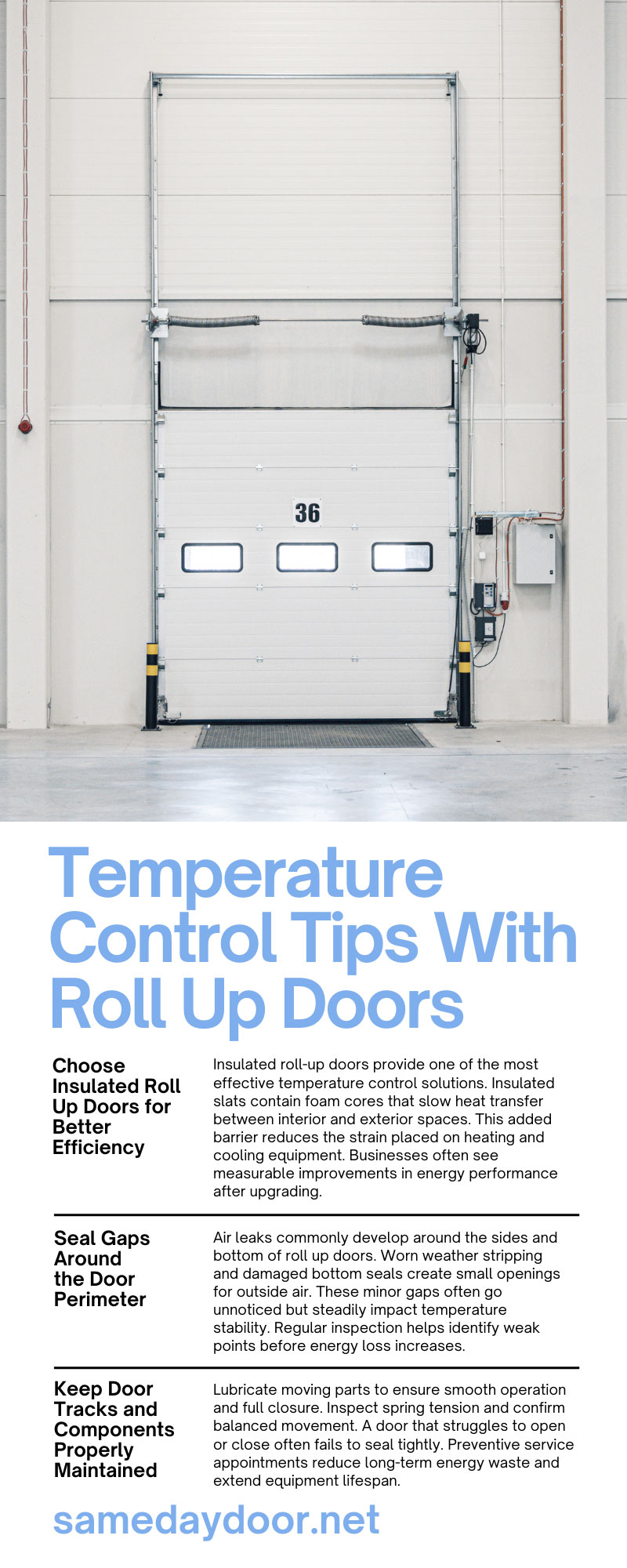
Insulated roll-up doors provide one of the most effective temperature control solutions. Insulated slats contain foam cores that slow heat transfer between interior and exterior spaces. This added barrier reduces the strain placed on heating and cooling equipment. Businesses often see measurable improvements in energy performance after upgrading.
Non-insulated doors allow outside temperatures to pass through thin metal surfaces. In extreme Missouri weather, heat transfer quickly affects indoor comfort. Insulated doors create a stronger thermal barrier, supporting consistent interior conditions. Facilities that store temperature-sensitive products benefit significantly from this upgrade.
Seal Gaps Around the Door Perimeter
Air leaks commonly develop around the sides and bottom of roll up doors. Worn weather stripping and damaged bottom seals create small openings for outside air. These minor gaps often go unnoticed but steadily impact temperature stability. Regular inspection helps identify weak points before energy loss increases.
Focus on these key sealing areas:
- Side guides where the curtain travels
- Bottom bar seal along the floor
- Header area above the curtain
- Joints between slats
- Threshold condition beneath the door
Replacing damaged seals restores tight closure and improves insulation performance. Proper sealing also blocks moisture, dust, and pests from entering the building.
Keep Door Tracks and Components Properly Maintained
Mechanical issues directly affect temperature control performance. Bent tracks or misaligned guides prevent the curtain from closing evenly. Gaps form when the door does not sit flush against the frame. Routine maintenance keeps all components functioning correctly.
Lubricate moving parts to ensure smooth operation and full closure. Inspect spring tension and confirm balanced movement. A door that struggles to open or close often fails to seal tightly. Preventive service appointments reduce long-term energy waste and extend equipment lifespan.
Minimize Door Open Time During Operations
Frequent door cycling significantly impacts interior temperatures. Each time the door opens, outside air enters and conditioned air escapes. High-traffic commercial properties experience this issue daily. Managing door usage helps maintain climate control.
Install timers or automatic closing systems to reduce open duration. Train staff to avoid leaving doors open unnecessarily during loading or deliveries. High-speed roll up doors offer faster operation and reduce exposure time. Small operational changes create measurable temperature improvements.
Install Air Curtains for High-Traffic Areas
Air curtains create a controlled stream of air across the doorway opening. This airflow forms a barrier that limits the intrusion of outside air. Businesses that open doors frequently benefit from this added layer of protection. Air curtains support temperature stability without slowing workflow.
Properly installed systems work alongside insulated doors for maximum efficiency. They reduce dust infiltration and improve indoor air quality. Facilities with food storage or medical supplies often rely on this solution. When combined with quality roll-up door service, air curtains enhance overall performance.
Monitor Interior Conditions Year-Round
Temperature control requires consistent monitoring throughout the year. Missouri summers bring heat and humidity, while winters introduce freezing conditions. Seasonal extremes test the performance of roll-up doors. Regular assessments ensure the system handles changing demands.
Install digital thermostats and humidity sensors near door openings. Compare readings in areas near the door with those in central interior spaces. Sudden variations often signal insulation or sealing issues. Early detection prevents rising utility costs and equipment strain.
Upgrade Older Roll-Up Doors When Necessary
Older roll-up doors often lack modern insulation technology. Metal fatigue, corrosion, and worn components reduce overall efficiency. Businesses sometimes focus solely on HVAC upgrades while ignoring door performance. Replacing outdated doors can dramatically improve temperature control.
Modern roll-up doors feature improved insulation ratings and tighter sealing systems. Advanced designs reduce thermal bridging and air leakage. Investing in upgraded systems supports long-term energy savings. It also enhances security and operational reliability.
Partner With Experienced Door Professionals
Professional evaluation helps identify hidden causes of temperature loss. Skilled technicians inspect structural alignment, insulation integrity, and seal condition. They recommend solutions tailored to each facility’s layout and usage. Expert guidance prevents costly trial-and-error upgrades.
Same-Day Door Service works with commercial properties throughout St. Louis to address door performance issues. Our fast installations and repairs help businesses maintain productivity without extended downtime. A proactive maintenance plan supports energy efficiency and long-term durability. Property managers gain confidence knowing their doors support consistent climate control.
Take Control of Energy Costs With Smarter Door Solutions
Roll-up doors play a central role in maintaining interior temperatures. Insulation, sealing, maintenance, and operational habits all influence performance. Addressing these factors reduces HVAC strain and lowers energy bills. Businesses that prioritize door efficiency create more stable and comfortable environments.
Evaluate the current condition of your roll-up doors before seasonal temperature extremes arrive. Schedule inspections to identify air leaks, insulation weaknesses, or mechanical issues. Upgrading components or installing new insulated systems delivers long-term value.
Same Day Door Service provides commercial and residential door solutions throughout St. Louis, Missouri. Many local businesses depend on reliable door systems for daily operations. Temperature fluctuations place strain on HVAC systems and increase monthly utility expenses.
Proper roll-up door installation and maintenance significantly improve climate control and energy performance. Contact Same Day Door Service to improve temperature control and protect your property year-round.